Dog Joint Supplements (2026): Evidence and NASC Seal
What vet schools say about glucosamine, chondroitin and fish oil for dogs, why supplements aren't FDA-approved drugs, and which hold the NASC Seal.
Independently chosen. As an Amazon Associate I earn from qualifying purchases: if you buy through our links, we may earn a commission at no cost to you. How we research
Quick answer
If your vet agrees a joint supplement is worth trying, fish oil has the best support: Cornell calls omega-3s from fish oil the supplement with the most support in the literature, and Nordic Naturals Omega-3 Pet is a liquid fish oil from an NASC seal holder. For a glucosamine chew, Dasuquin is the one a Cornell nutrition professor names, and Zesty Paws Mobility Bites and Purina Pro Plan Joint Care come from NASC seal holders. Evidence for glucosamine and chondroitin is weak, weight control matters more, and none of these is an FDA-approved drug.
Our picks
- Fish oil, dosed by your vetNordic Naturals Omega-3 Pet, Liquid Fish Oil for Dogs, 8 ozFrom the listing · not tested
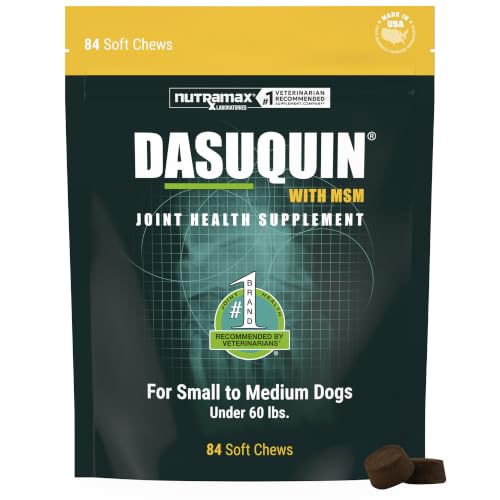
- Glucosamine with ASUNutramax Dasuquin with MSM Soft Chews, Small to Medium Dogs, 84 CountFrom the listing · not tested
- Dogs that take tabletsNutramax Cosequin with MSM, Chewable Tablets, 132 CountFrom the listing · not tested



A joint chew for a stiff or aging dog rests on thinner evidence than its packaging suggests. Below is what Cornell, the University of Illinois and the FDA say, which brands hold the National Animal Supplement Council's Quality Seal, and five supplements sold by Amazon.com or the brand's own store. Ask your vet before you start one.
How we chose: we did not test these products; we read the listings, checked each company against NASC's own member list on September 28, 2026, and checked our FDA and CPSC recall list, which shows no recalls for these brands.
Five joint supplements side by side
| Supplement | Main joint ingredients (per listing) | Form | NASC seal holder? | Sold by | Amazon price |
|---|---|---|---|---|---|
| Nordic Naturals Omega-3 Pet | Fish oil (EPA, DHA) | Liquid | Yes | Nordic Naturals | $22.34 (Amazon, as of Nov 13, 2026, 1:48 PM UTC)Check price |
| Dasuquin with MSM, Small/Medium | Glucosamine, chondroitin, ASU, MSM | Soft chew | Not on list | Amazon.com | $49.99 (Amazon, as of Nov 13, 2026, 1:48 PM UTC)Check price |
| Cosequin with MSM | Glucosamine, chondroitin, MSM | Chewable tablet | Not on list | Amazon.com | $34.91 (Amazon, as of Nov 13, 2026, 1:48 PM UTC)Check price |
| Zesty Paws Mobility Bites | Glucosamine, chondroitin, MSM | Soft chew | Yes | Zesty Paws | $29.97 (Amazon, as of Nov 13, 2026, 1:49 PM UTC)Check price |
| Pro Plan Joint Care, Large Breed | Glucosamine, chondroitin, collagen, hyaluronic acid, omega-3 | Soft chew | Yes | Amazon.com | $19.99 (Amazon, as of Nov 13, 2026, 1:49 PM UTC)Check price |
Prices are Amazon's, as of the time shown, and subject to change. Details
"NASC seal holder" means the company has a green check mark on NASC's member list, which NASC says marks companies that "have earned permission to display the NASC Quality Seal on their products." It is a company-level audit, not a test of whether a chew helps joints.
A supplement is not an FDA-approved drug
The FDA does not approve joint supplements the way it approves arthritis drugs. On its page about reporting animal drug side effects, the FDA says: "Unapproved animal drugs include human drugs used in animals, compounded drugs, animal supplements, and other products." The same page explains how to tell the difference: FDA-approved animal drugs carry a New Animal Drug Application number, and their labels say "Approved by FDA under NADA # XXX-XXX."
So no joint chew on this page has been through FDA review for safety or effectiveness. If your dog has a reaction to one, the FDA page says you can report it on Form FDA 1932a, and it asks vets reporting any case for "the names and doses of drugs, vitamins, and supplements the animal has been given." Keep a list.
Cornell's Riney Canine Health Center makes the same point from the other side. Its joint supplement article notes that drug makers must fund research proving efficacy, and "supplement manufacturers do not have to meet these same requirements."

What the evidence says, ingredient by ingredient
Fish oil (omega-3s). This is the ingredient vet schools are most confident in. Cornell quotes Dr. Christopher Frye: "The supplement with the most support in the literature currently is omega-3 fatty acids from fish oil."
The University of Illinois, in its osteoarthritis management overview by Dr. Monica Chen, says EPA and DHA "have consistently been shown to result in decreased inflammation in arthritic joints."
Cornell's Dr. Wakshlag adds that "using fish oil may help in reducing the necessary dose of NSAIDs for pain relief."
Glucosamine and chondroitin. The evidence is mixed, and the two schools say so in different tones. Illinois: "No strong evidence has been documented to prove the reliable benefit of glucosamine/chondroitin or other supplements (i.e., green-lipped mussel, turmeric-derived polyphenols)," though it calls them "generally" safe with "anecdotal benefits."
Cornell's Wakshlag: "few other than fish oil have been definitively proven to help slow the degeneration, but we think that things like glucosamine and chondroitin may help slow the progression." He also says Cornell currently recommends "fish oil and Dasuquin rather globally as things that might help slow progression."
Avocado/soybean unsaponifiables (ASU). Dasuquin's extra ingredient. Illinois says ASU and vitamin E "may also reduce pro-inflammatory cytokines and improve pain." That is a "may," not a proof.
Green-lipped mussel. Cornell says multiple studies have found it helps dogs with arthritis at a stated dose per kilogram; Illinois lists it among supplements without strong evidence. None of the five picks here is built around it.

Fish oil: give it on its own, and watch the calories
Cornell says fish oil "should generally be given as a separate product to get the optimal dose for joint health," because chews "usually" contain little omega-3 (moisture makes them break down). That is why the Nordic Naturals liquid is on this list next to the chews, and why the omega-3 in Purina's Joint Care chew is a bonus, not a substitute.
Two cautions come with it:
- Calories. Dr. Frye at Cornell says, "I never recommend this supplement in overweight dogs or for patients on the verge of being overweight, since oil is high in calories." For those dogs, weight loss comes first.
- Stomach and bleeding. Illinois says high doses are needed for joint benefits and "diarrhea is not uncommon," so it suggests starting low and increasing gradually. It also says fish oil "can alter the coagulation pathway" and should be avoided in animals known to have bleeding disorders.
Cornell's article gives a daily fish oil dose by body weight, and Illinois links to a dosing chart. Products vary in concentration, and Cornell says to read the label and consult your veterinarian about the specific product. Get the number from your vet, not from a chart.
What the NASC Quality Seal checks
The National Animal Supplement Council is a trade group, not a regulator, but its seal is the one quality mark on pet supplements with a published audit. Its Quality Seal page says member companies must pass an independent quality audit and keep:
- a quality control manual with written standard operating procedures;
- an adverse event reporting and complaint system;
- labels that follow NASC's guidelines and include caution statements the FDA's Center for Veterinary Medicine recommends;
- random product testing by an independent lab "to ensure products meet label claim."
Cornell's advice is to use "a brand recommended by your veterinarian or one that bears the National Animal Supplement Council (NASC) seal."
On the list we loaded, Nordic Naturals, Zesty Paws and Nestle Purina Petcare had the green check mark. Nutramax Laboratories, which makes Dasuquin and Cosequin, did not appear on the member list at all. That does not mean its products fail an audit, only that the NASC seal cannot be your reason for buying them; the Cornell mention is.
Weight and exercise come before any chew
Illinois is blunt: "weight loss is one of the most effective ways to manage OA." It recommends intentional loss of "no more than 1% to 2% body weight per week," and says "low-impact regular exercise, as well as specialized rehabilitation therapy, is helpful in long-term management." Cornell ends the same way, reminding owners that excess weight contributes to the onset and progression of joint disease.
At home, the gear side of that is a supportive bed and good footing. Our orthopedic dog bed guide covers foam types and bolsters, senior dog essentials covers ramps, rugs and harnesses for older dogs.
Related: our senior dog food guide covers calories and what a "senior" label does and does not mean.

Prescription options are a different category
If your dog is stiff or limping, a supplement may not be enough, and the next steps are prescription drugs your vet chooses and monitors.
NSAIDs. Illinois calls non-steroidal anti-inflammatory drugs "the mainstay of analgesic medications" for arthritis. It also says they "should be used cautiously in patients with renal disease, hepatopathy, gastrointestinal problems, and endocrinopathy," and that older dogs may be more prone to stomach ulcers with continuous use. Never give your dog a human pain reliever without your vet's direction.
Librela (bedinvetmab). The FDA approved Librela, "a monoclonal antibody drug used for the control of pain associated with osteoarthritis in dogs," on May 5, 2023; it is a monthly injection given by your vet.
In a December 2024 Dear Veterinarian letter, the FDA said it had evaluated adverse events reported in treated dogs, including "ataxia, seizures, other neurologic signs," urinary incontinence, increased urination and thirst, and that in some cases death or euthanasia was reported. The FDA said it had found Librela safe and effective before approval, and that monitoring after approval can reveal events not seen in trials.
Illinois adds that veterinarians have raised concerns about musculoskeletal adverse events. If your dog gets Librela, ask your vet what to watch for.
This page is general information, not veterinary advice (more on that). Ask your vet before you start any joint supplement, and bring the product so they can check it against your dog's medicines.
Our picks, in order
Ranked in the order we recommend them, from listings, certifications and standards. Where a price appears it is Amazon's, with the time it was read.
Fish oil, dosed by your vet
Nordic Naturals Omega-3 Pet, Liquid Fish Oil for Dogs, 8 oz
From the listing · not testedBuy it if your vet agrees to fish oil and your dog is not overweight.
Pros
- + Liquid fish oil with EPA and DHA, in triglyceride form, per the listing
- + Nordic Naturals is marked on NASC's member list as permitted to display the Quality Seal
- + A liquid, so you can give the dose your vet sets by body weight
Cons
- - Oil adds calories; Cornell's Dr. Christopher Frye does not recommend fish oil for overweight dogs
Glucosamine with ASU
Nutramax Dasuquin with MSM Soft Chews, Small to Medium Dogs, 84 Count
From the listing · not testedBuy it if you want the chew Cornell names and accept the evidence is mixed.
Pros
- + Glucosamine hydrochloride, chondroitin sulfate, avocado/soybean unsaponifiables (ASU), MSM, boswellia and green tea extract, per the listing
- + The product a Cornell nutrition professor names alongside fish oil as something that might help slow progression
- + Adds ASU, which Illinois says may reduce inflammation and improve pain
Cons
- - Nutramax does not appear on NASC's member list, so no NASC seal
Dogs that take tablets
Nutramax Cosequin with MSM, Chewable Tablets, 132 Count
From the listing · not testedBuy it if your dog takes tablets and you do not need Dasuquin's ASU.
Pros
- + Glucosamine hydrochloride, sodium chondroitin sulfate and MSM, per the listing
- + Nutramax says it suits any breed or size, young or senior
- + Chewable tablet rather than a soft chew
Cons
- - No ASU, unlike Dasuquin; Nutramax is not on NASC's member list

Chew from an NASC seal holder
Zesty Paws Mobility Bites, Bison, 90 Soft Chews
From the listing · not testedBuy it if you want a glucosamine chew from an NASC seal holder.
Pros
- + 450 mg glucosamine HCl and 400 mg OptiMSM per chew, plus chondroitin and vitamins C and E, per the listing
- + Zesty Paws is marked on NASC's member list as permitted to display the Quality Seal
Cons
- - Built on an ancient-grain base of quinoa, millet, amaranth and sorghum, per the listing; check the label if your dog has a food allergy

Large-breed dogs
Purina Pro Plan Veterinary Supplements Joint Care, Large Breed, 30 Count
From the listing · not testedBuy it if you have a large dog and want one combined chew.
Pros
- + Glucosamine, chondroitin, collagen and hyaluronic acid, plus omega-3 fatty acids, per the listing
- + Nestle Purina Petcare is marked on NASC's member list as permitted to display the Quality Seal
- + Large-breed chew; a small-breed version is sold too
Cons
- - Cornell says chews usually carry little omega-3, so it does not replace fish oil
Frequently Asked Questions
What does the NASC seal on a dog supplement mean?
The company passed an independent quality audit and keeps NASC's requirements, including an adverse event system and random lab testing that products meet label claims. It does not prove the supplement helps joints.
Is fish oil safe for every dog?
Not always. Cornell's Dr. Frye does not recommend it for overweight dogs because oil is high in calories, and Illinois says it should be avoided in animals with bleeding disorders and can cause diarrhea at high doses.
When should a dog start a joint supplement?
Cornell says to discuss the age with your veterinarian, and notes some evidence that these products are more preventive than curative. For a dog already limping, see your vet first.
Proof
Sources
Everything this guide relies on, as linked in the text. Last checked September 28, 2026.
- nasc.cc: NASC's member list
- U.S. Food and Drug Administration: How report animal drug and device side effects and product problems
- vet.cornell.edu: How joint supplements can help orthopedic conditions
- vetmed.illinois.edu: Osteoarthritis management options
- nasc.cc: Quality Seal page
- U.S. Food and Drug Administration: Dear Veterinarian letter
PetProofLab is a participant in the Amazon Services LLC Associates Program, an affiliate advertising program designed to provide a means for sites to earn advertising fees by advertising and linking to Amazon.com. Ingredients are from the listings, NASC status is from NASC's own member list, and evidence is from the veterinary sources linked above.
Amazon prices and availability change often; cards with a live Amazon price show when it was last checked. As an Amazon Associate I earn from qualifying purchases.
