Dog Nail Clippers and Grinders (2026)
Guillotine, scissor-style and grinder tools for dog nails, where the quick is on light and dark nails, styptic powder for a nick, and a note on trimming cats.
Independently chosen. As an Amazon Associate I earn from qualifying purchases: if you buy through our links, we may earn a commission at no cost to you. How we research
Quick answer
A guillotine clipper such as the CHI for Dogs Guillotine Trimmer is the easy start for a first-time trimmer: Washington State University's veterinary hospital calls the guillotine type the easiest to use in dogs. For a large dog with thick nails, the Fiskars Pet Large clipper is a spring-action, two-handle alternative. For a dog that hates the clip, a grinder such as the Dremel 7350-PET or PawControl 7760-PET files the nail down in small passes. Keep Kwik Stop styptic powder on hand for a nick, and stop cutting when a gray to pink oval appears on the cut surface.
Our picks



A first home nail trim and a dog that has started to fight the clipper need the same two things: the right tool type and a sense of where the quick sits. Both come from a veterinary teaching hospital's instructions: the three tool types, the quick on light and dark nails, and a short section on cats.
How we chose: we did not test these tools; we read the listings and makers' descriptions, matched them to the tool types a veterinary teaching hospital describes, and kept only tools sold by Amazon.com that were in stock on September 28, 2026.
Five nail tools side by side
| Tool | Type | What the listing highlights | Sold by | Amazon price |
|---|---|---|---|---|
| CHI for Dogs Guillotine Trimmer | Guillotine clipper | Fixed safety guard, stainless blade | Amazon.com | Check price |
| Fiskars Pet Large Nail Clippers | Two-handle clipper, 5.75 in | Semi-circular blades, spring action, safety lock | Amazon.com | $16.99 (Amazon, as of Nov 12, 2026, 11:24 PM UTC)Check price |
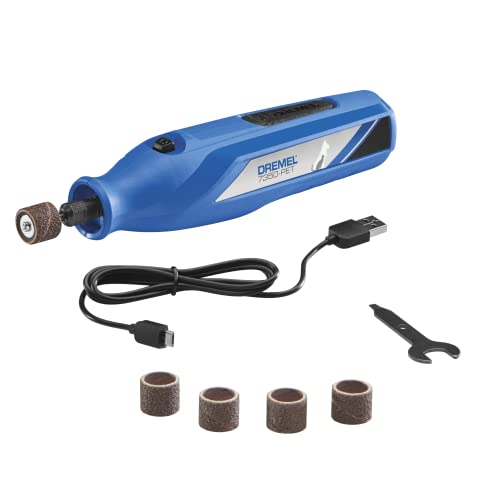
| Dremel 7350-PET | Cordless grinder | 60-grit sanding bands, micro-USB charging | Amazon.com | $35.67 (Amazon, as of Nov 12, 2026, 11:23 PM UTC)Check price |
| Dremel PawControl 7760-PET | Cordless grinder | 45 degree nail guard, 4 speeds, 9 bits | Amazon.com | $62.90 (Amazon, as of Nov 12, 2026, 11:24 PM UTC)Check price |
| Kwik Stop Styptic Powder | Styptic powder | With benzocaine; for dogs, cats and birds | Amazon.com | $9.99 (Amazon, as of Nov 12, 2026, 11:23 PM UTC)Check price |
Prices are Amazon's, as of the time shown, and subject to change. Details
Guillotine, scissor or grinder
Washington State University's Veterinary Teaching Hospital, in its guide on how to clip a dog's nails, names two clipper styles: "The guillotine-type is the easiest to use in dogs. The scissors-type is often used to trim the dew claw."
The American Kennel Club, a breed registry rather than a veterinary body, lists the same two plus "grinder tools specifically designed for dogs" in its nail trimming guide, and says to use whichever works best for you and your dog.
Guillotine clipper. You slide the nail tip into a ring and squeeze; a blade crosses the ring. WSU's technique: put the tip of the nail in the stationary ring with the clipper perpendicular to the nail, keep the cutting blade on your side rather than the dog's, and cut from underneath at a 45 degree angle.
The CHI for Dogs Guillotine Trimmer adds a fixed guard that limits how far the nail can go in, per its listing. CHI notes that very thick or overgrown nails may need several passes.
Scissor or plier style. Two handles and two blades, like pruning shears. WSU says the scissors type is the one for the dewclaw, which sits on the inner side of the leg and can usually be bent away so you can trim it.
The Fiskars Pet Large has semi-circular blades that Fiskars says give a clear view of the nail, a spring that reopens the blades after each cut, and a safety lock. Fiskars aims it at medium and large dogs.
Grinder. A small rotary tool with a sanding band that files the nail down. The AKC says some dogs tolerate grinders better while others prefer clippers. The Dremel 7350-PET is the simple version: cordless, micro-USB charging, 60-grit bands. The Dremel PawControl 7760-PET adds a nail guard with a 45 degree paw guide, which Dremel says sets the trimming angle and collects dust, plus four speeds and nine sanding bits.

Where the quick is, and how to stop short of it
The quick is the living core of the nail. WSU describes it as "the blood vessels and nerves that supply the claw," and cutting into it "can be painful for the animal and cause bleeding."
On light nails you can see it as the pink area inside the nail. WSU says "light colored claws are easier to cut than dark claws" for that reason, and that it's best "to not cut within 2 millimeters of the quick."
On dark nails you cannot see it, so you watch the cut surface instead:
- Cut dark claws "in several small cuts to reduce the chance of cutting into the quick," per WSU.
- As you go deeper, "a gray to pink oval starts to appear at the top of the cut surface of the nail." Stop there. WSU says more cutting will reach the quick and cause bleeding.
- The AKC adds: for dogs with dark nails, "watch for a chalky white ring," and avoid clipping past the curve of the nail.
Nails that are trimmed regularly are easier. The AKC says "regular nail trimming will cause the quick to recede from the end," which is one reason small, frequent trims beat rare big ones.
How often: the ASPCA's at-home grooming tips say a dog's nails should be trimmed "when they just about touch the ground when they walk," or if they click or snag on the floor. The AKC puts most dogs at every three to four weeks, depending on activity and how fast the nails grow.
Don't forget the dewclaw. WSU says it "often grows into the toe pad causing pain for dogs," and because it does not touch the ground it is not worn down by walking, so it needs regular trimming.
If you nick the quick
Open the styptic powder before you pick up the clipper. WSU says: "Styptic powder stops bleeding when applied," and without it "it may take about 5 minutes for the bleeding to stop."
The ASPCA says to apply styptic powder or corn starch to the bleeding tip "ASAP," pressing it in a little so it sticks, and adds: "If bleeding continues for more than a few minutes, please alert your veterinarian, who can check your dog for clotting disorders."
Miracle Care calls Kwik Stop "the Original styptic powder"; this tub is sold by Amazon.com. Its directions are to put the powder on a moistened cotton applicator and press it on the nail with moderate pressure for 5 to 10 seconds, and not to use it on deep wounds or body cavities. The formula includes benzocaine, per the listing.
If a nail keeps bleeding, is split up into the toe, or your dog will not let you near its feet, stop and call your vet (more on that). WSU also recommends that owners learn to trim from "a veterinarian or veterinary technician first." Keep the styptic powder with your first aid supplies; our pet first aid kit guide lists it alongside the AVMA's kit items.

How to hold a dog and get used to the tool
WSU's hold is simple: many dogs sit in your lap or on a table, but many need restraint. Drape your arms and upper body over the dog; for the front feet, keep your forearm over the neck so the dog cannot lift its head, and if the dog is too wiggly, lay it on its side. "Grip each individual toe firmly with your thumb and forefinger."
It helps to start young. WSU says it is best to begin in young dogs so they get used to it.
The AKC suggests a few days of introduction before the first real trim: let the puppy sniff the clipper or grinder, touch it to each paw, then squeeze the clipper or run the grinder so the puppy hears and feels it without cutting, with a treat and praise each time.
For a grinder, the AKC's tips are to grind only a small part of the nail at a time, support the toe firmly but gently, work across the bottom of the nail and then in from the tip, and keep long hair back so it doesn't get caught in the tool.
Pro tip: trim one or two nails, stop while the dog is still calm, and finish the next day. A short, easy session teaches more than a long fight.
Trimming a cat's claws
The same tools work on cats, with a different grip. WSU's guide on how to clip a cat's nails says cats have retractile claws, so "gently squeeze the toe between thumb and forefinger to expose the claw."
Most cats have light claws, which makes the pink quick easy to see; cut about 2 millimeters from it. WSU says the guillotine type is the easiest to use in cats too, and a nail file can smooth the end.
The ASPCA recommends a trim "every ten days to two weeks" for cats and something to scratch.
Cornell's Feline Health Center, in its page on destructive behavior, suggests regular trims or glued-on plastic nail caps, replaced every six to 12 weeks, for cats that let you handle their paws. It also explains that declawing "is actually an amputation of the bones at the tips of the paws, not a simple removal of the nails."

Tools we left out
The Safari Professional clipper, a common pick, was offered only by third-party sellers when we checked, and so were Millers Forge and Resco clippers. Zen Clipper was sold by Pet Product Innovations rather than Amazon.com, and Casfuy grinders by Minlan Store and Casfuy Direct. Any of them may be a fine tool; we kept to Amazon.com so we could be sure who was shipping.
None of these brands appears on our pet product recall page, which tracks FDA and CPSC pet recalls, as of September 28, 2026.
Related: our guides to deshedding brushes and brushes by coat type cover the rest of a grooming kit, and nail care is a good time for a flea check; our flea and tick prevention guide covers what to use.
Our picks, in order
Ranked in the order we recommend them, from listings, certifications and standards. Where a price appears it is Amazon's, with the time it was read.
First clipper for small dogs
CHI for Dogs Guillotine Nail Trimmer
From the listing · not testedBuy it if this is your first clipper and your dog is small or medium.
This exact listing was unavailable at our last check; the button opens current Amazon results for it.
Pros
- + Guillotine design: the nail slips through an opening before you squeeze, per the listing
- + Fixed safety guard limits how far the nail goes in; stainless steel blade
- + Soft grip handles
Cons
- - One size; CHI says very thick or overgrown nails may need several passes
Big dogs and dewclaws
Fiskars Pet Large Nail Clippers, 5.75 in
From the listing · not testedBuy it if your dog is big with thick nails, or you are trimming a dewclaw.
Pros
- + Semi-circular blades designed to give a clear view of the nail, per the listing
- + Spring action reopens the blades after each cut; safety lock
- + Precision-ground stainless steel blades
Cons
- - Fiskars pitches it at medium to large dogs, so it is a lot of tool for a toy breed
Dogs that hate the clip
Dremel 7350-PET Cordless Nail Grinder
From the listing · not testedBuy it if your dog tolerates the buzz better than the clip.
Pros
- + Cordless 4-volt lithium battery with micro-USB charging, per the listing
- + Dremel says it is 7 percent quieter and runs 30 percent longer than its 7300-PT
- + Kit includes five 60-grit sanding bands and a mandrel
Cons
- - No nail guard in this kit, so you control the angle yourself
Grinding at a set angle
Dremel PawControl 7760-PET Nail Grinder
From the listing · not testedBuy it if you want a guard to set the grinding angle for you.
Pros
- + Nail guard attachment with a 45 degree paw guide for trimming angle and dust collection, per Dremel
- + Four speed settings on a slide switch and nine sanding accessories
- + Cordless, 4-volt lithium battery with USB charging
Cons
- - More to learn than the 7350-PET: a guard, four speeds and nine bits

Stopping a nicked nail
Miracle Care Kwik Stop Styptic Powder, 0.5 oz
From the listing · not testedBuy it with any clipper, and open it before you start trimming.
Pros
- + Styptic powder with benzocaine for dogs, cats and birds, per the listing
- + Directions: press it on with a moistened cotton applicator, with moderate pressure for 5 to 10 seconds
- + Made in Dayton, Ohio, per the listing
Cons
- - Not for deep wounds or body cavities, per the directions
Frequently Asked Questions
Are nail grinders safer than clippers?
Neither is safer by rule. The AKC says both are safe when used correctly, some dogs tolerate grinders better, and with a grinder you should take only a small part of the nail at a time.
What happens if I let my dog's nails grow long?
Over time, the paw changes shape. The AKC says long nails "can turn a sound paw into a splayed foot and reduce traction," and over an extended period can deform the feet and injure the tendons.
How often should I trim my cat's nails?
The ASPCA suggests every ten days to two weeks, along with a scratching post.
Proof
Sources
Everything this guide relies on, as linked in the text. Last checked September 28, 2026.
- hospital.vetmed.wsu.edu: How to clip a dogs nails
- akc.org: How to trim dogs nails safely
- ASPCA: Home pet grooming top tips and recommendations
- hospital.vetmed.wsu.edu: How to clip a cats nails
- vet.cornell.edu: Feline behavior problems destructive behavior
PetProofLab is a participant in the Amazon Services LLC Associates Program, an affiliate advertising program designed to provide a means for sites to earn advertising fees by advertising and linking to Amazon.com. This guide is for general information and is not veterinary advice.
Amazon prices and availability change often; cards with a live Amazon price show when it was last checked. As an Amazon Associate I earn from qualifying purchases.
